
Finding affordable housing in Douglas County can feel overwhelming, especially when you are trying to make sense of income limits, waiting lists, and eligibility rules. But affordable housing is more accessible than many people realize, and the resources available today are expanding.
Whether you are exploring options for the first time or ready to submit an application, this guide breaks down exactly who qualifies for affordable housing in Douglas County, what the process looks like, and where to get help.
What Is Affordable Housing?
Affordable housing refers to rental units priced to remain within reach of households earning moderate, low, or fixed incomes. These communities are supported through a combination of local, state, and federal housing programs. They are specifically designed to help residents maintain stable housing near jobs, schools, transportation, and community services.
In most affordable housing programs across Colorado, rent is tied to Area Median Income (AMI), a benchmark published annually by the U.S. Department of Housing and Urban Development (HUD). Douglas County falls within the Denver-Aurora-Lakewood metro area for HUD income limit purposes, which means AMI thresholds here reflect one of the higher-cost regions in Colorado.
Affordable housing in Douglas County may include:
- Income-restricted rental apartments for individuals and families
- Senior housing communities for adults 55 and older
- Accessible units for adults with disabilities
- Workforce housing serving teachers, healthcare workers, first responders, and other essential employees
Who Qualifies for Affordable Housing in Douglas County?
Eligibility for affordable housing depends on the specific property and program. Most communities consider a combination of household income, household size, employment or income sources, age (for senior communities), and disability status.
Understanding AMI Income Limits
Most affordable housing programs use AMI income tiers established annually by HUD. Depending on the property, households may qualify at 30%, 50%, 60%, or 80% of AMI. Based on current HUD figures for the Denver-Aurora-Lakewood metro area, which includes Douglas County, approximate 2025 income limits for a single-person household are:
Income limits for a 1-person household · Denver-Aurora-Lakewood metro area (Douglas County) · FY2025 HUD guidelines
Limits increase with household size. Figures updated each spring by HUD — verify current limits directly with the property or program you are applying to.
How to Apply for Affordable Housing in Douglas County
Income limits increase with household size, so a household of four qualifies at a higher dollar amount than a single person at the same AMI percentage. All sources of income count, including wages, Social Security, pensions, child support, and self-employment. Limits are updated each spring, so always verify current figures directly with the property or program you are applying to.
Do You Have to Be Unemployed to Qualify?
No. Many residents who qualify work full-time in fields like education, healthcare, retail, hospitality, construction, and public service. The income thresholds are broader than most people expect, and a single person earning close to $70,000 annually may still qualify as low income in Douglas County under current HUD guidelines.
Who Affordable Housing Serves
Affordable housing in Douglas County is designed for a wide range of residents, including:
- Working families in essential service industries
- Seniors on fixed incomes
- Adults with developmental or physical disabilities
- Veterans and first responders
- Recent graduates entering the workforce
Douglas County’s Proposition 123 regional partnership is actively working to increase the number of affordable units countywide and prioritize access for vulnerable populations, including people with intellectual or developmental disabilities. The partnership spans Douglas County, Lone Tree, Parker, Castle Rock, and Castle Pines, with a combined three-year goal of creating over 1,000 new affordable housing units across the county.
What Types of Affordable Apartments Are Available in Douglas County?
Affordable apartment options exist across Douglas County, including:
- Castle Rock, the county seat, with growing affordable inventory near shopping and transit
- Parker, a family-friendly community with workforce housing opportunities
- Highlands Ranch, a large planned community with income-restricted rental availability
- Lone Tree, home to DCHP’s administrative offices and nearby affordable communities
- Castle Pines, a newer community with developing housing resources
- Roxborough, southwestern Douglas County, near state park access
Two notable projects are currently in the pipeline for Douglas County:
Forte Senior Affordable Housing Community (Lone Tree) is located in RidgeGate Village Center at 10760 Crossfield St. This 101-unit community, developed by Koelbel and Company, is restricted to adults 55 and older. Units use an income-averaging approach with AMI levels ranging from 30% to 80%, with the average below 60% AMI. Construction began in December 2024 with an anticipated completion of May 2026. A second phase of 64 additional units is targeted for early 2027.
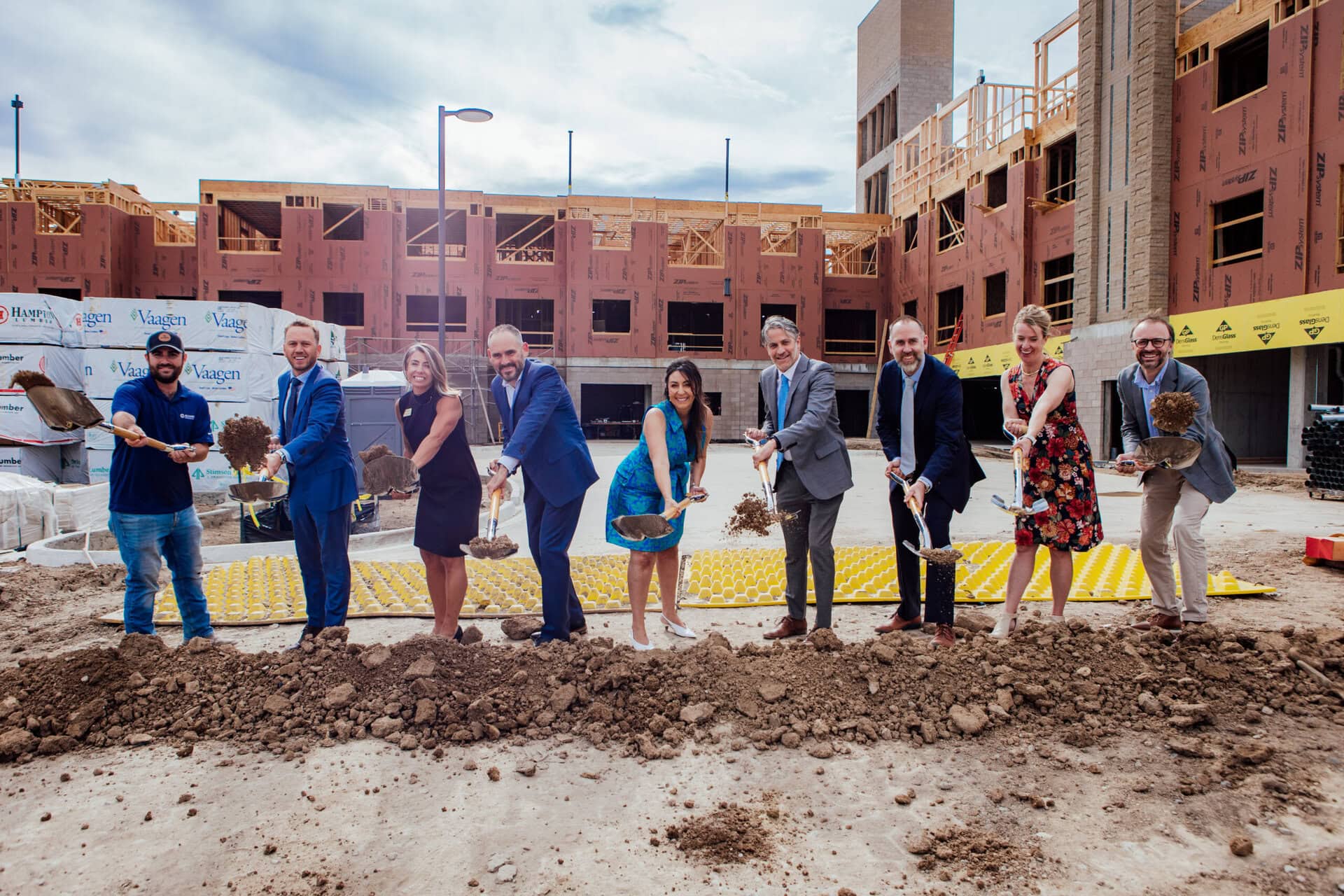
Ponderosa Pines (Parker) received $6 million in Proposition 123 concessionary debt from the Colorado Office of Economic Development and International Trade. The project will create 204 affordable housing units in unincorporated Douglas County for households earning at or below 60% AMI.
Affordable Housing Douglas County
Section 8 Housing Choice Voucher Program
The Douglas County Housing Partnership administers Section 8 Housing Choice Vouchers, which help low-income households pay for housing in the private rental market. Voucher holders pay a portion of rent based on their income, and the program covers the remainder up to a payment standard.
DCHP periodically opens its Section 8 waiting list to new applicants. If you hold a voucher from another jurisdiction and wish to relocate to Douglas County, you may be able to “port in” your voucher.
Rental Assistance Vouchers
As of July 2023, DCHP became a sub-contractor of the Colorado Division of Housing to administer a portion of state rental assistance vouchers in Douglas County, expanding the number of households the agency can serve.
Homebuyer and Down Payment Assistance
For residents working toward homeownership, DCHP offers down payment assistance and first-time homebuyer programs designed to bridge the gap between lower wages and higher home prices in Douglas County. Borrowers must occupy the home as a primary residence for a minimum of 10 years under HUD affordability regulations.
Housing Counseling
As a HUD-approved Housing Counseling Agency, DCHP provides foreclosure mediation, Home Equity Mortgage Conversion (HECM) counseling, and homebuyer education to Douglas County residents at no cost.
How Do Affordable Housing Waiting Lists Work in Colorado?
Affordable housing is in high demand across Colorado, and Douglas County is no exception. Most communities and programs maintain waiting lists, and some open only during limited application windows. Wait times vary based on availability, unit type, household size, income level, and accessibility needs. Key things to know:
- Apply as early as possible. Opening dates for waiting lists are often announced with limited notice.
- Keep your contact information current. Missing a notification can result in removal from a list.
- Apply to multiple communities. Applying to several properties at once increases your chances of securing a place sooner.
- Section 8 waiting lists open infrequently. DCHP has historically opened its Housing Choice Voucher waiting list for only a single day before closing again.
How to Apply for Affordable Housing in Douglas County
Applying for affordable housing in Douglas County involves four key steps: gathering your financial documents, identifying properties that match your household income and size, submitting your application, and monitoring your status. The checklist below walks through each step in detail.
Collect everything before you start. Missing documents are the most common cause of delays.
- Government-issued photo ID
- Social Security cards
- 2–4 months of pay stubs
- Tax returns or W-2s
- Bank statements
- Benefit or pension letters
Review income limits, unit sizes, and any age or disability requirements for each property before applying. Contact DCHP for current availability.
Apply to multiple communities when possible. Some accept applications year-round; others open for limited windows only. Apply online when available.
Stay reachable by phone and email. Respond promptly to any request — missing a notice can remove you from a waiting list.
Need help? Contact DCHP at 9350 Heritage Hills Circle, Lone Tree, CO 80124 or visit douglascountyhousingpartnership.org
Frequently Asked Questions About Affordable Housing in Douglas County
Can I qualify for affordable housing if I work full-time?
Yes. Many residents of affordable communities are employed full-time. Income limits at 80% AMI in the Denver-Aurora metro area allow a single person earning up to approximately $71,900 to qualify as low income.
Does affordable housing mean I live in poor conditions?
No. Income-restricted housing in Douglas County ranges from newly constructed senior communities to well-maintained family apartment complexes, many of which are located near transit, parks, schools, and employment centers.
Can I apply for Section 8 and a traditional affordable apartment at the same time?
Yes. These are separate programs. Applying to multiple options simultaneously is strongly recommended, given wait times.
What if I am a veteran?
Veterans may qualify for both general affordable housing programs and veteran-specific housing assistance. DCHP can help connect veterans with appropriate resources.
What if I have a disability?
DCHP administers accessible units and works to connect residents with disabilities to appropriate housing. You can request reasonable accommodations throughout the application process by contacting DCHP directly.
How Douglas County Housing Partnership Can Help
The Douglas County Housing Partnership (DCHP) was established in 2003 as a multi-jurisdictional housing authority, a cooperative effort between local businesses and county and municipal governments to address the shortage of affordable housing for working residents in Douglas County. As a HUD-approved Housing Counseling Agency, DCHP serves Castle Rock, Parker, Highlands Ranch, Lone Tree, Castle Pines, and surrounding communities from its office at 9350 Heritage Hills Circle, Lone Tree, Colorado 80124.
Next Steps: Start Your Search for Affordable Housing in Douglas County
If you are ready to explore affordable housing options, begin by gathering your financial documents, identifying communities that match your household size and income level, and contacting DCHP for guidance on current availability and waiting list status.
To learn more about affordable housing programs and housing-related services throughout Douglas County, contact Douglas County Housing Partnership today!
Income limits referenced in this article are based on FY2025 HUD data for the Denver-Aurora-Lakewood, CO metropolitan area. FY2026 limits are typically released by HUD each spring. Verify current limits directly with the property or program you are applying to.